

MyPrivateDressing.ch geschlossen | die beste Alternative im Vergleich
MyPrivateDressing.ch: Plattform geschlossen, das ist die beste AlternativeMyPrivateDressing.ch war jahrelang eine feste Grösse im Schweizer Second-Hand-Luxusmar...
6 Minute readA Chanel bag is much more than just an accessory. It’s a statement, an investment, and a piece of fashion history. But especially with popular models like the Classic Flap or the 2.55, the number of counterfeits on the market is rising. That makes it all the more important to have the right tips and tricks at your fingertips before buying or selling, so you can tell an original from a fake.
Hardly any other brand embodies timeless elegance and luxury as much as Chanel. Since its founding in 1910 by Gabrielle “Coco” Chanel, the fashion house has become an icon of high fashion—with legendary designs like the Chanel suit, the chain strap, the CC logo, and the 2.55 bag, which have been considered must-haves for decades.
Demand for Chanel bags remains consistently high, and prices for the Chanel Flap Bag have doubled over the past five years. Currently, the small Flap model retails for over CHF 10,000. For many consumers, affording a new, authentic Chanel bag has become virtually impossible. It is precisely this timeless desirability that makes Chanel an ideal target for counterfeiters: the resale value is tempting, and many designs have barely changed over decades—making it difficult for laypeople to distinguish between the original and a fake.
You’ve got your eye on a Chanel bag, but you’re not sure if it’s real? No wonder: the differences between the original and a fake often lie in the details. The fakes have become so sophisticated that even experts are finding it increasingly difficult to spot them with the naked eye. With our guide, we’ll show you what to look for. This way, you can check step by step whether you’re looking at a genuine Chanel gem or should steer clear of it.
The serial number is one of the most important features for authenticating a Chanel bag. It’s essentially the fingerprint of your luxury item. Every original Chanel handbag from around 1984 onward bears a serial number and comes with a matching authenticity card (if available). Both should match exactly.
The serial number is located inside the bag, usually hidden in a corner or on the lining. It is printed on a small, transparent sticker with a hologram—firmly affixed and coated with a protective varnish. Depending on the model, it may be located on the side, under the inner pocket, or on the side panel. Vintage bags, some of which are 40 years old or older, often no longer have a (legible) serial number. It may have faded or been completely covered up, or it may never have been there in the first place, as Chanel only began systematically assigning serial numbers to bags starting in 1984. At LOOP, however, you can also have these very old Chanel bags authenticated.
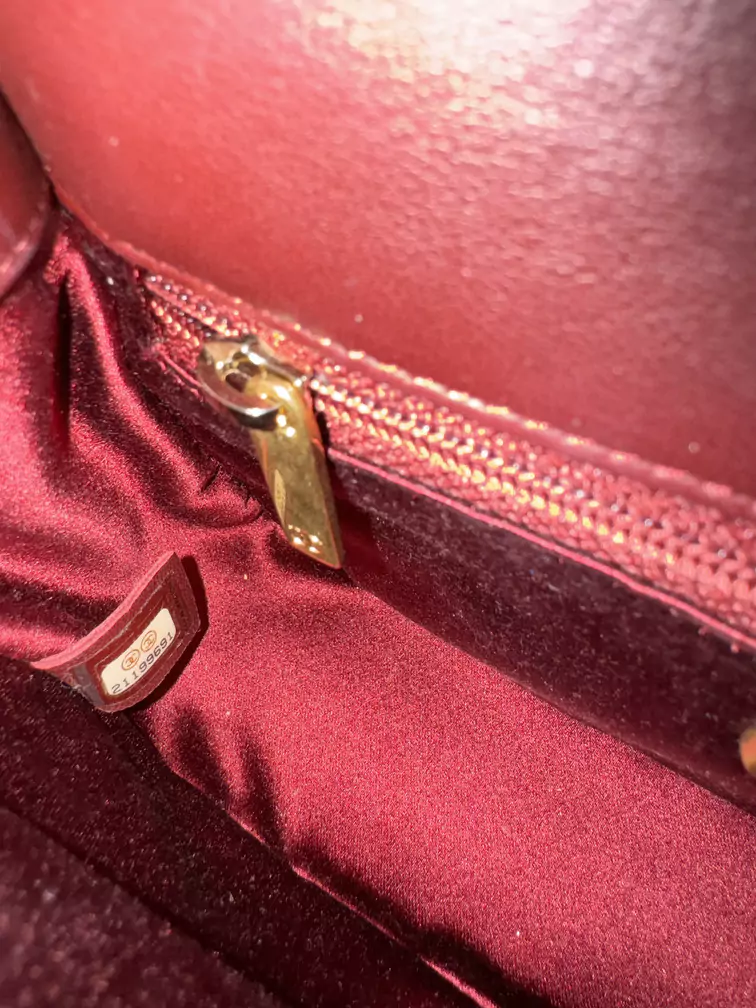
Chanel has changed the format of its serial numbers several times over the years. A quick look at the number can already narrow down the year of manufacture:
| Year of manufacture | Serial number |
| 1984 - 1986 | 6 digits |
| 1986–2004 | 7 digits |
| 2005 to approx. 2021 | 8 digits |
| From 2021 | New microchips instead of stickers & cards |
Counterfeiters go to great lengths to imitate the serial number, and admittedly, they are getting better at it. However, there are still typical errors, including the following:
Chanel’s CC logo is world-famous, which is precisely why it’s one of the most commonly poorly copied features on fakes. The same applies to the embossed lettering inside the bag. If you look closely, you’ll quickly notice: on originals, the proportions, symmetry, and quality are flawless.
The interlocking double C on the bag flap or clasp is a key trademark. Look for:
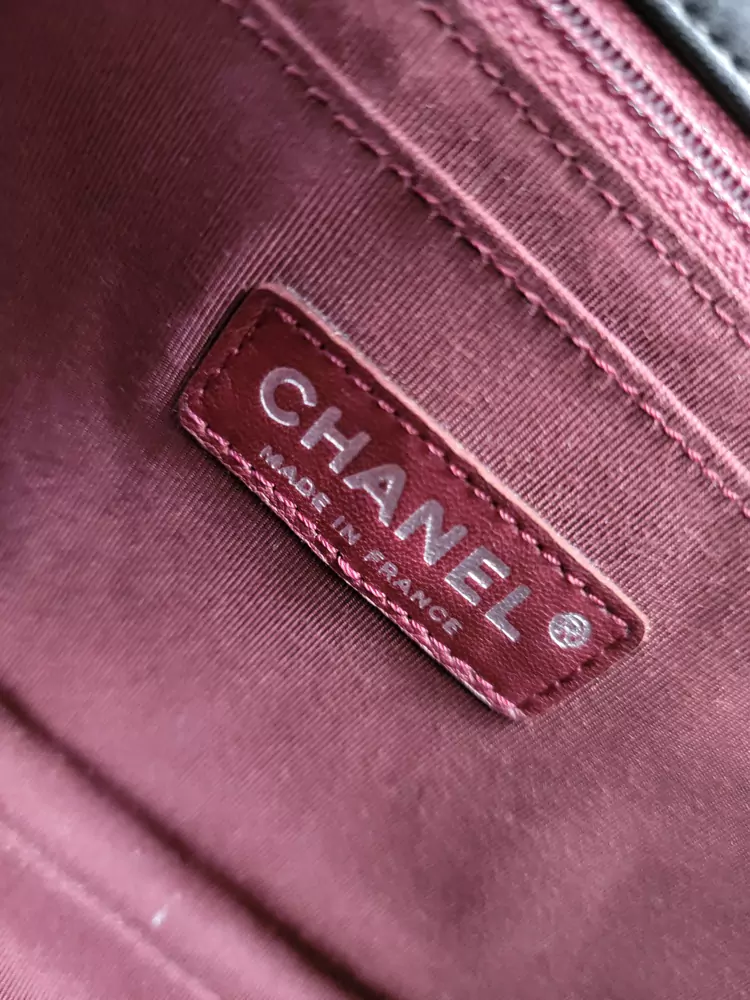
The Chanel lettering is usually embossed on the inside of the bag—often along with the place of manufacture (“Made in France” or “Made in Italy”). Here, too, the rule applies: On originals, everything is clear, precise, and uniform.
Look for:
A genuine Chanel bag feels high-quality from the very first touch. From the choice of leather to the final stitch, Chanel prioritizes uncompromising quality. Many counterfeits fail precisely here, because where money is saved, the difference becomes apparent.
Chanel typically uses lambskin or caviar leather for its bags, both of which have unique characteristics.
📌 Quick tip: Fakes often exaggerate the grain in “caviar leather” or use cheap, hard synthetic leather—you can tell just by pressing lightly or rubbing with your finger.
The detailed stitching is particularly noteworthy. Here, too, many fakes can be quickly identified. Poor workmanship indicates a lack of authenticity. When examining a Chanel handbag, pay attention to the number of stitches. Here, there are consistently 10–11 stitches per cm on every single seam.
Additionally, the diamond quilting runs symmetrically, is uniformly sized, and continues seamlessly across flaps and edges. There are neither loose threads nor slanted lines.
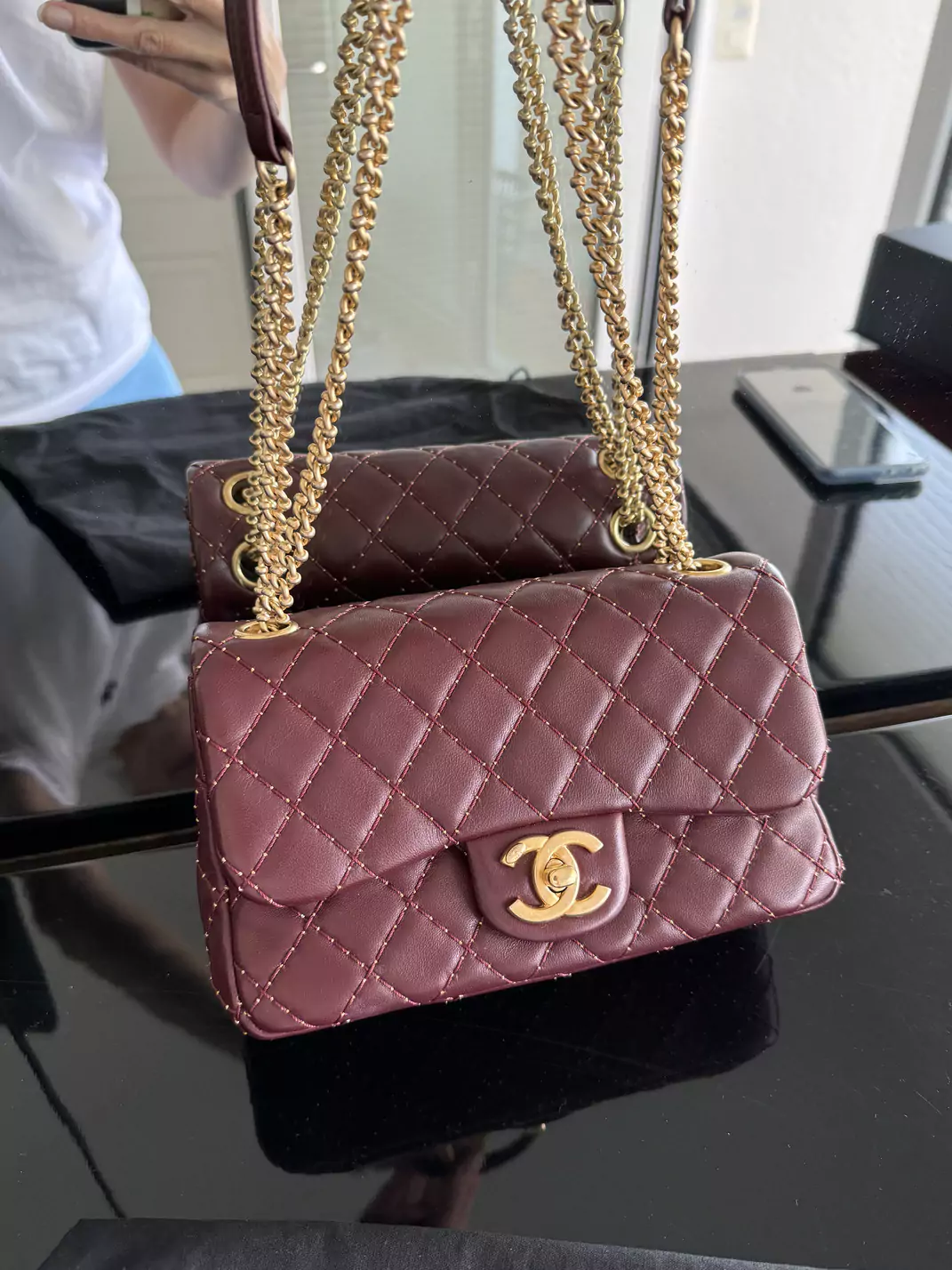
The lining is usually made of leather or high-quality fabric, depending on the model. You can tell the high quality just by feeling it. Chanel bags are typically very durable, so even with older models, the quality is still evident after many years. Additionally, the inner lining is taut, rather than loose or wrinkled. For the lining of Chanel bags from the 80s and 90s, a plasticizer was used for the coating, which began to break down over the years, becoming sticky or dusty. These bags are indeed authentic, even though the interior might raise doubts.
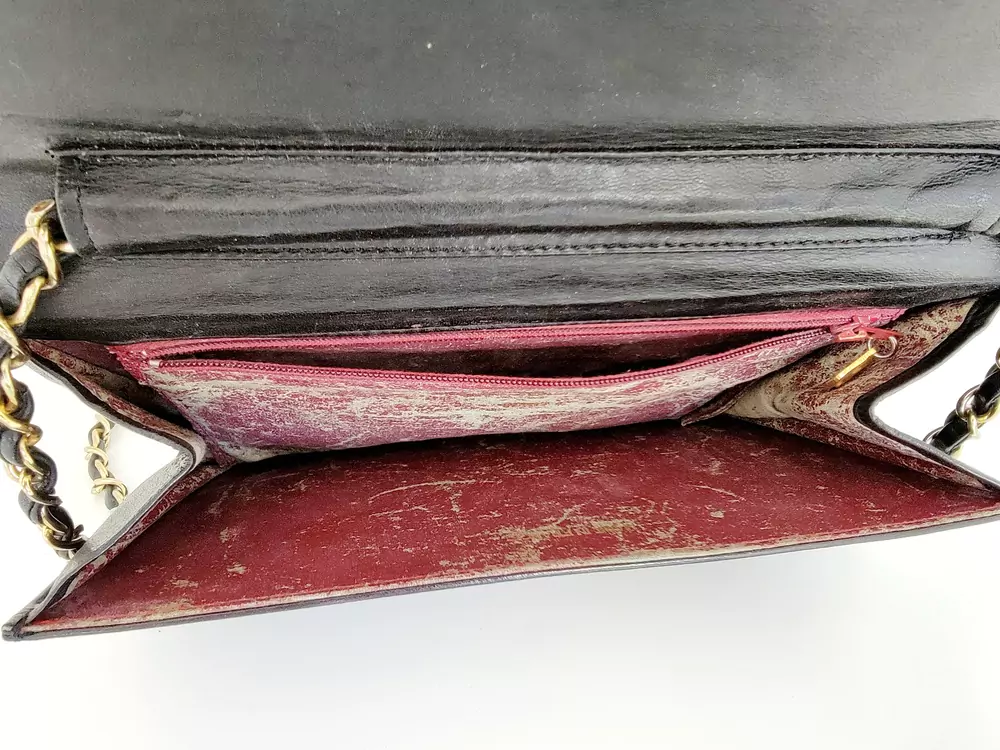
The smell test can provide quick insights. Whether it’s a vintage model or a new bag, Chanel handbags always have a fairly neutral scent.
Counterfeit Chanel bags, on the other hand, often have a chemical smell, sometimes similar to plastic or glue.
📌 Quick tip: Don’t be fooled by perfume. Since many women carry perfume in their handbags, the scent can cling to the bag.
Whether it’s the Chanel Classic, Double Flap, or Chanel Boy—the exterior components also reflect quality down to the last detail. From the zipper to the snap button to the chain: these details often reveal more about authenticity than you might think. Fakes often look similar but feel off.
Authentic Chanel bags have a noticeable weight, especially due to the high-quality metal parts: the chain feels solid yet supple. Snap fasteners and closures offer precise resistance and snap securely into place.
Fakes, on the other hand, are often surprisingly light or feel “hollow.”
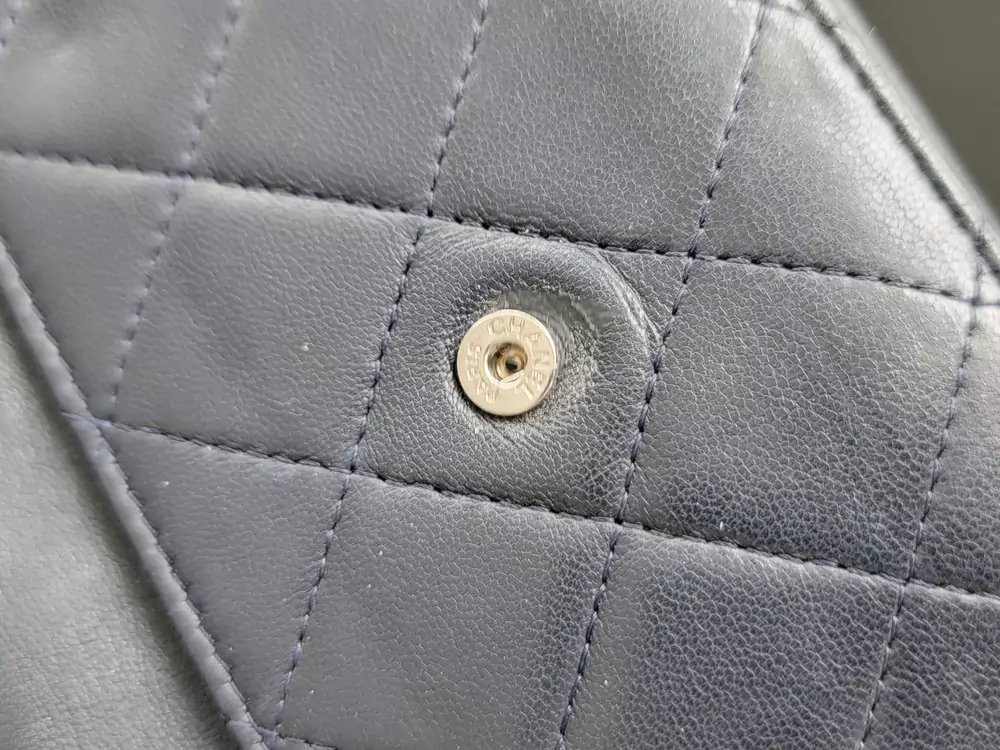
Genuine Chanel metal elements are engraved depending on the model and collection. Often on the snap button, the zipper pull, or the CC clasp. Sometimes even on the chain links. In one era, the CC logos on the front flap were engraved; in another, they were not. On newer models, you can see these engravings again on the metallic CC logo. Here, too, you need to know which model and from which year your bag is to determine whether it should have an engraving or not. Next, you need to know which of the two Cs and in which corner of the C the engraving should be.
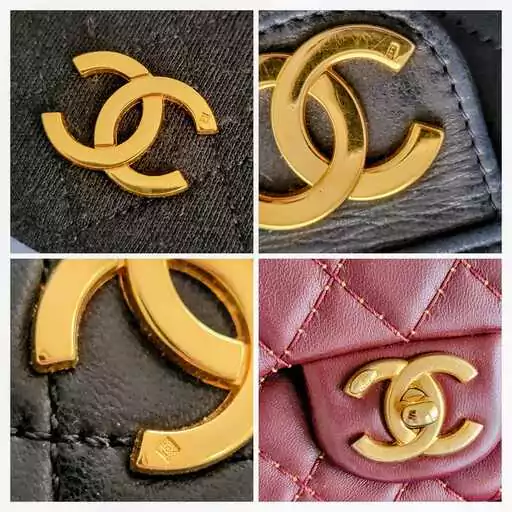
On snap fasteners, there is usually an engraving on the back with the manufacturer’s name (e.g., “SWISS”)—a detail that many counterfeits omit or copy sloppily.
Chanel often uses gold-plated or high-quality treated brass, which is non-magnetic. If the chain strap or clasp reacts strongly to a magnet, it could be cheap metal with a coating.
Genuine Chanel gold (24k gold-plated, especially on older models) has a deep, rich golden hue. It is usually only slightly shiny and not too yellow. While newer models use high-quality but no longer genuine gold, they still look warm and elegant.
Beware of “gold-colored” fakes: These are often too garish, lack a patina effect, and upon closer inspection, small flakes may already be peeling off. But be careful: On vintage models with gold-plated hardware and a gold-plated chain, the gold plating may have faded over the decades. This has nothing to do with fakes, but is due to wear and aging.
Would you rather play it safe when selling? We’re happy to help and will verify your bag’s authenticity using the unique Entrupy Authenticity Check. Entrupy compares your bag’s microscopic features against its database of millions of images and issues you an authenticity guarantee, including financial protection!
Have your Chanel bag checked now
Chanel is known for iconic bag models that have made fashion history. But every bag has its own features that you should look for during the authenticity check. Here are the most important classics and what you should pay special attention to with them:
A professional check is always worth it. A professional authentication service not only gives you peace of mind when buying but also ensures that you’re investing in an original that retains its value. Models like the Classic Flap or the 2.55 often increase in value over the years—but only if their authenticity is proven beyond a doubt. It’s better to have your bag checked for a small fee so you don’t find out in a few years that you’ve invested several thousand francs in a fake!
In addition, many services provide you with an official certificate, which is extremely helpful when you later resell the bag. It builds trust with buyers, makes price negotiations easier, and makes your listing stand out significantly on platforms.
In short: An authenticity check doesn’t just protect you from counterfeits. It also makes your bag a verifiably valuable investment.
Chanel bags are more than just fashion. They are genuine objects of value and, for that very reason, are often the target of counterfeiters. Those who know what to look for protect themselves from costly mistakes and can identify high-quality originals based on a variety of features. Chanel regularly updates certain details of its bags to stay one step ahead of counterfeiters. This dynamic makes it difficult even for an expert to guarantee authenticity based on specific details. If you don’t have in-depth expert knowledge, you’re only on the safe side with an authentication service—whether you’re buying, selling, or simply a lover of timeless luxury pieces.
MyPrivateDressing.ch: Plattform geschlossen, das ist die beste AlternativeMyPrivateDressing.ch war jahrelang eine feste Grösse im Schweizer Second-Hand-Luxusmar...
6 Minute readGucci Gürtel Fake erkennen: So schützt du dich vor FälschungenDer ikonische Gucci Gürtel mit dem markanten Doppel-G-Logo ist längst mehr als nur ein Accessoire,...
7 Minute readGucci Cap Fake erkennen: Der ultimative Guide für sichere Luxus-KäufeEine echte Gucci Cap ist mehr als nur ein modisches Accessoire, sie ist ein Statement-Piece...
7 Minute readPrivacy settings
Your satisfaction is our goal, that`s why we use cookies. With these, we enable our website to run reliably and securely, keep an eye on performance and better address you.
Cookies are required so that everything works technically and you can also read external content. Furthermore, cookies help to get insights about your browsing behavior on our site to improve our service we offer to you. You can find out more about the services we use under »Cookie settings«.
By clicking on »Agree and continue« you agree to the use of these services. You can revoke or change your consent at any time with effect for the future.
Cookie settings
Adjust your personal preferences below.
Technical cookies
Technical cookies are essential for the basic functionality of the website.
Google Analytics
Provides us with valuable information about usage behavior in order to further improve our website.
Google Tag Manager
Provides us with valuable information about usage behavior in order to further improve our website.
Meta Pixel
Serves as marketing for personalized advertising.
Microsoft Clarity
Enhances our tracking analysis.